Identify It
Tree of Heaven is often mistaken for a few native trees, so it's worth checking more than one feature before you decide. The fastest, most reliable field test is the smell — the rest confirms it.
Fastest field test: crush a leaf
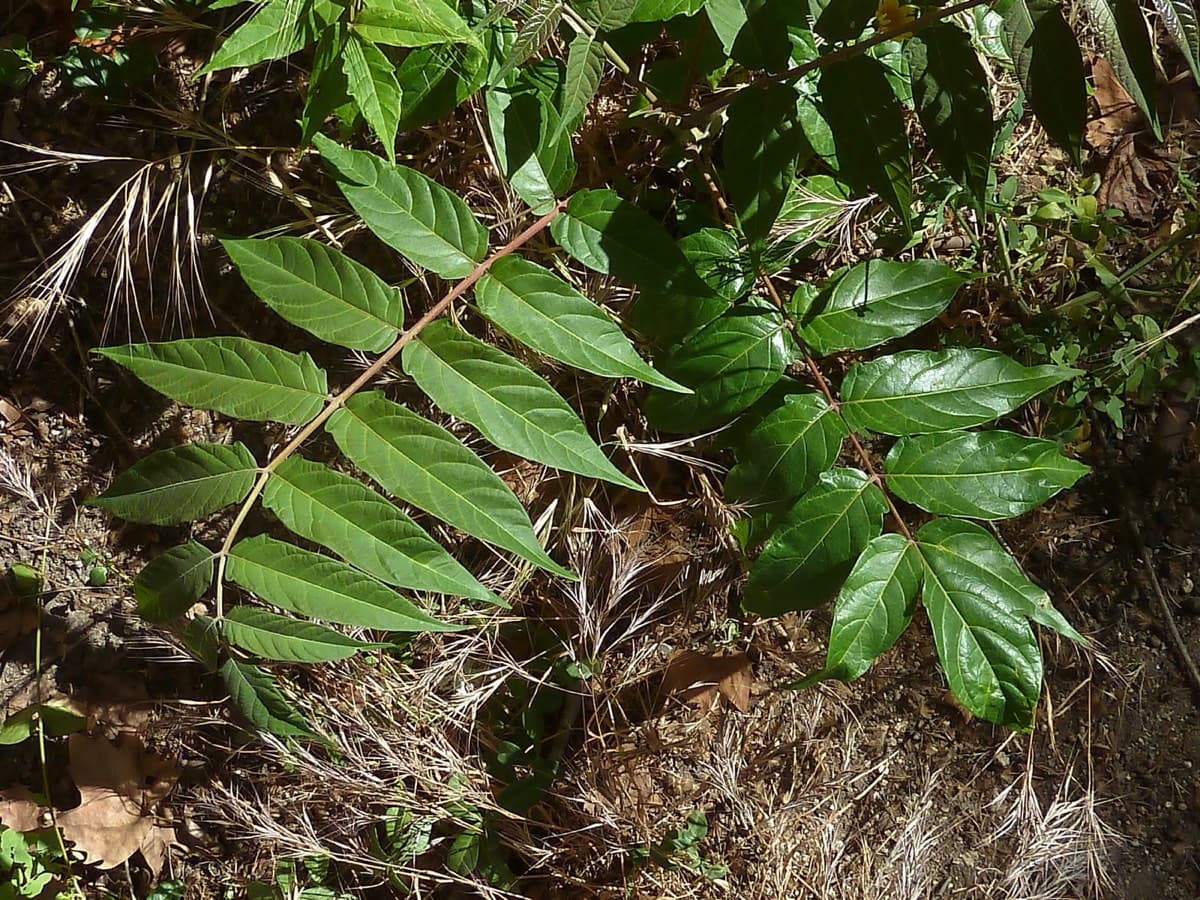
Leaves are alternate and pinnately compound, with 11–41 leaflets and up to 3 feet long overall.
Photo: Philmarin · source · CC BY-SA 4.0
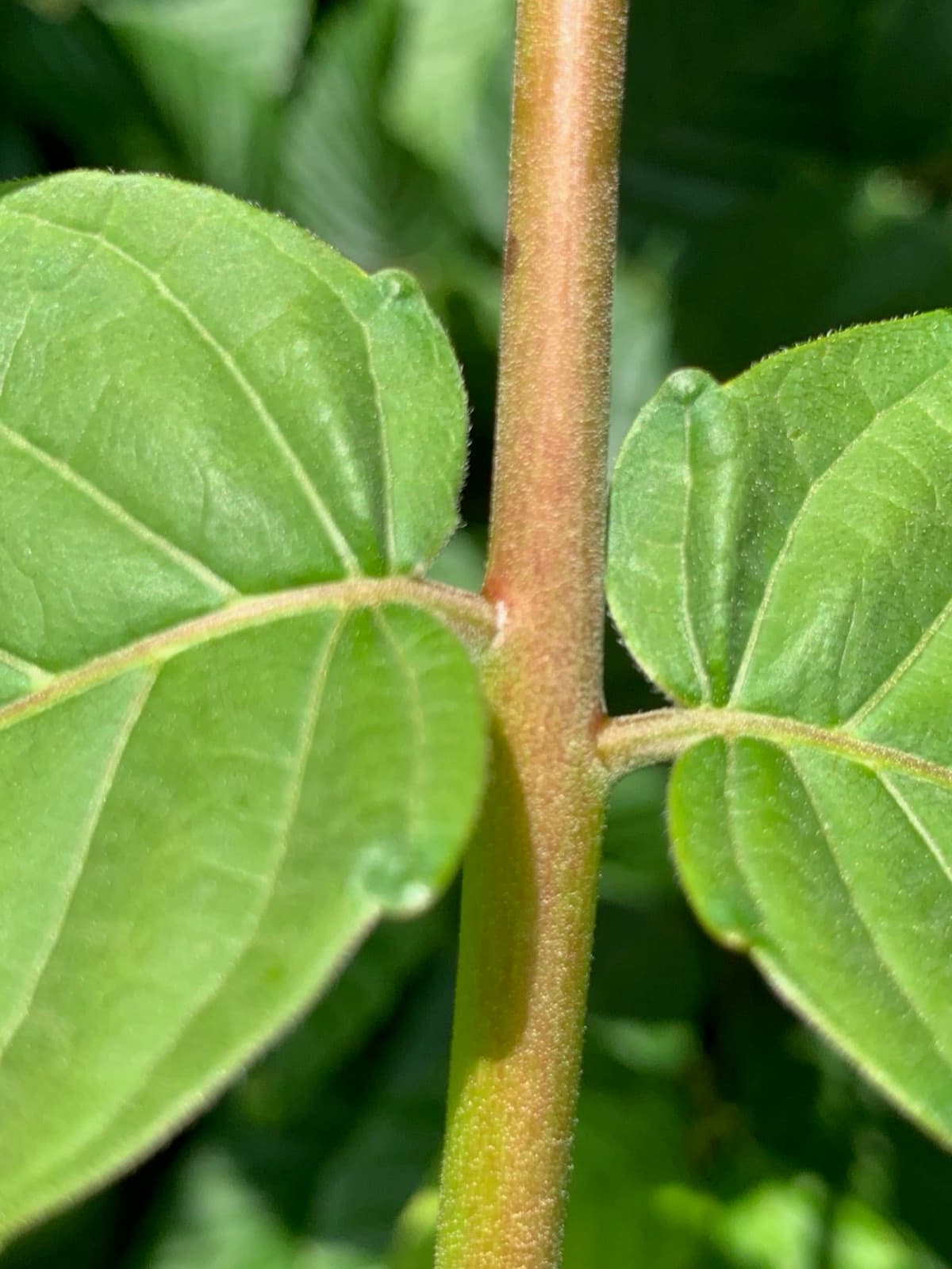
The single best field mark: 1–2 small glandular teeth near the base of each leaflet — the rest of the leaflet edge is smooth.
Photo: Katherine Wagner-Reiss · source · CC BY-SA 4.0
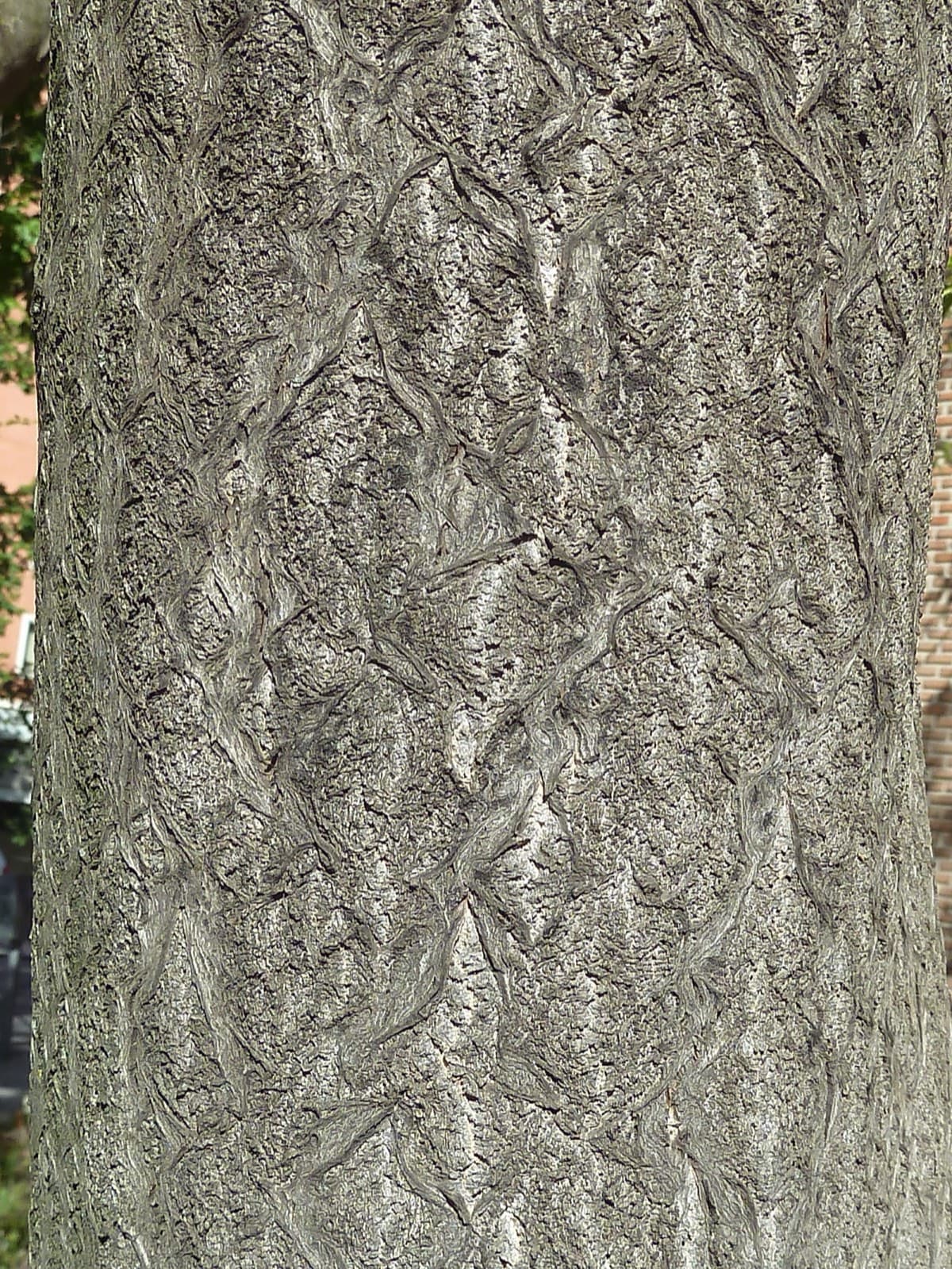
Bark is smooth and pale gray on young trees, often compared to cantaloupe rind; it develops shallow diamond-shaped fissures with age.
Photo: Philmarin · source · CC BY-SA 4.0
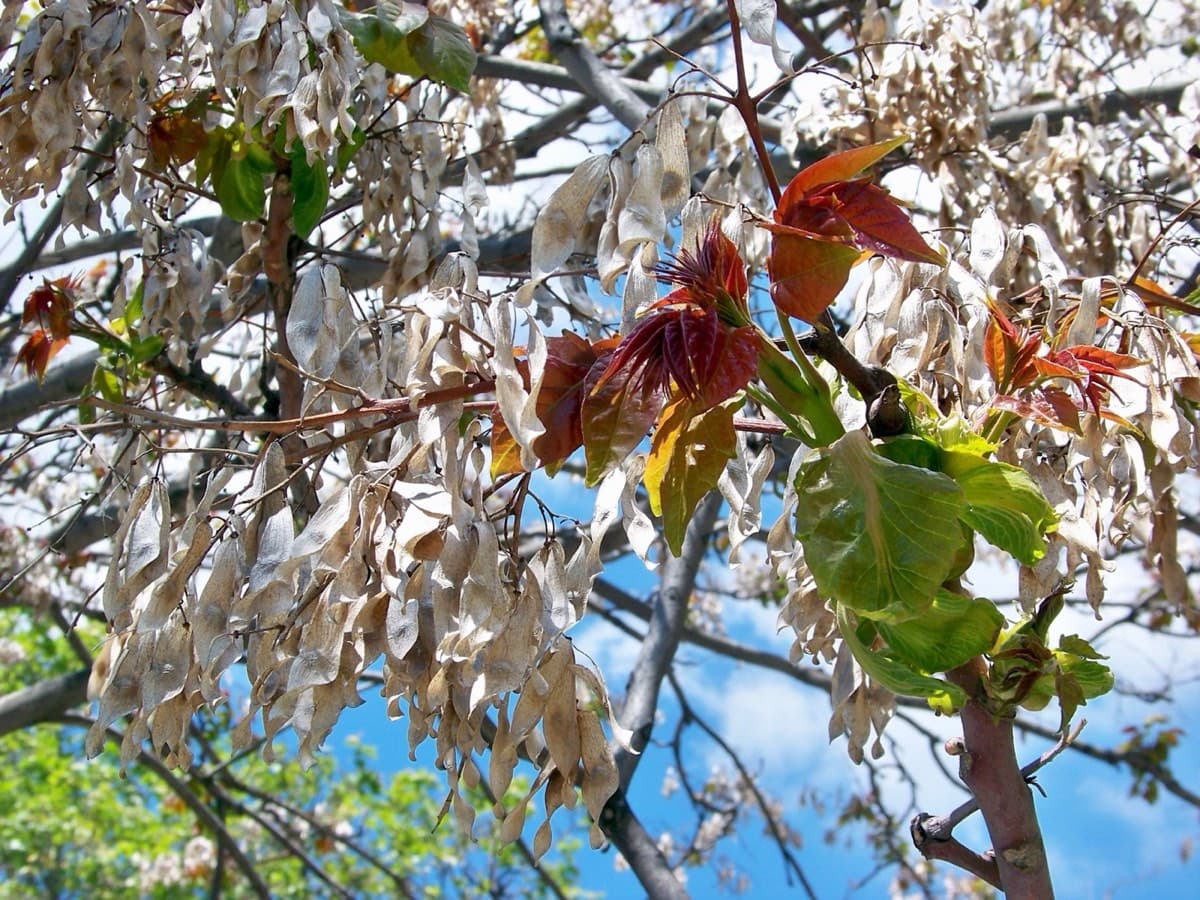
Seeds form in twisted, wing-shaped samaras that turn reddish-brown in fall — a single mature female tree can produce 300,000+ a year.
Photo: Philmarin · source · CC BY-SA 4.0
Don't confuse it with these native look-alikes
Two native species get mistaken for Tree of Heaven most often. The leaflet edge is the reliable tiebreaker: Tree of Heaven's leaflets are smooth-margined except for those basal glands; both look-alikes below are toothed along their entire leaflet edge.
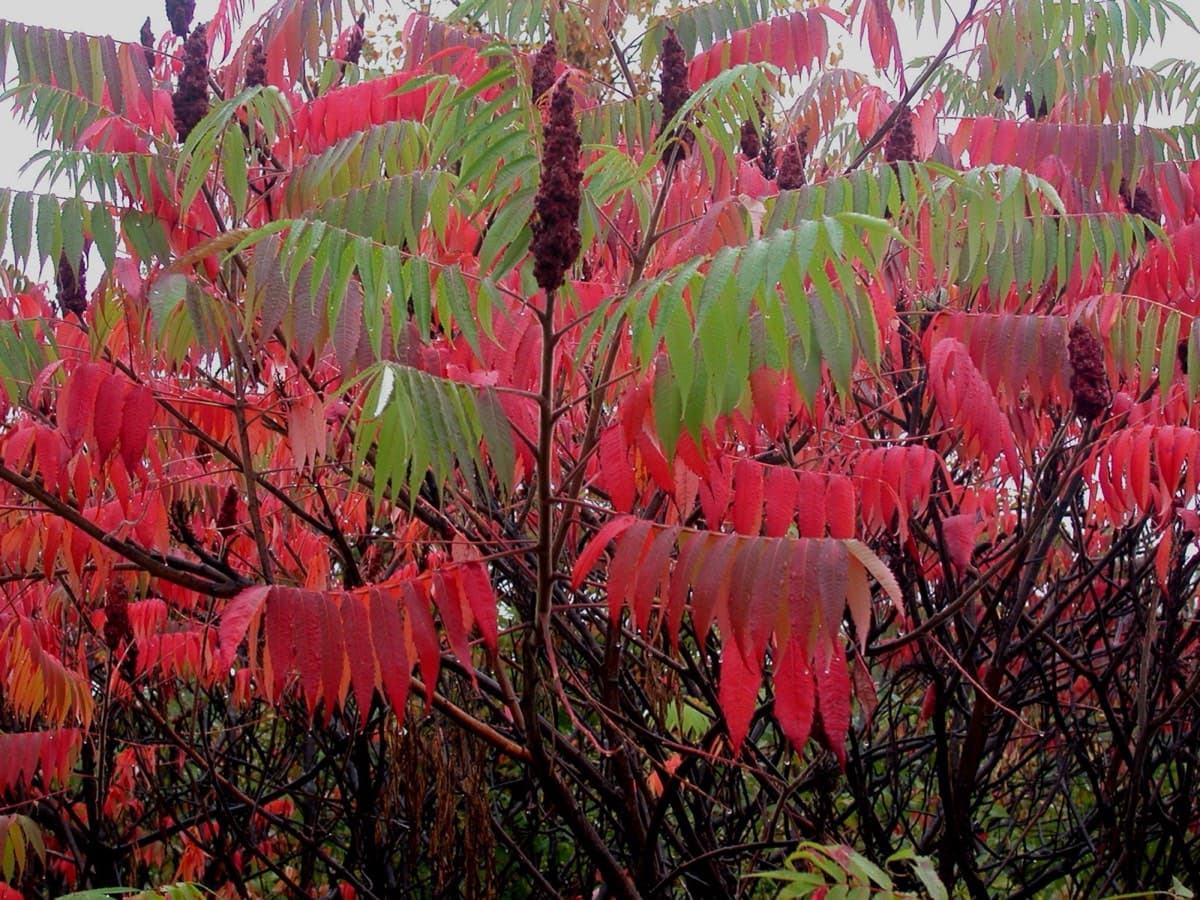
Staghorn / smooth sumac (Rhus typhina / R. glabra) — leaflets are serrated along their entire margin, not just at the base.
Photo: Gilles Ayotte, Université Laval · source · CC BY-SA 4.0
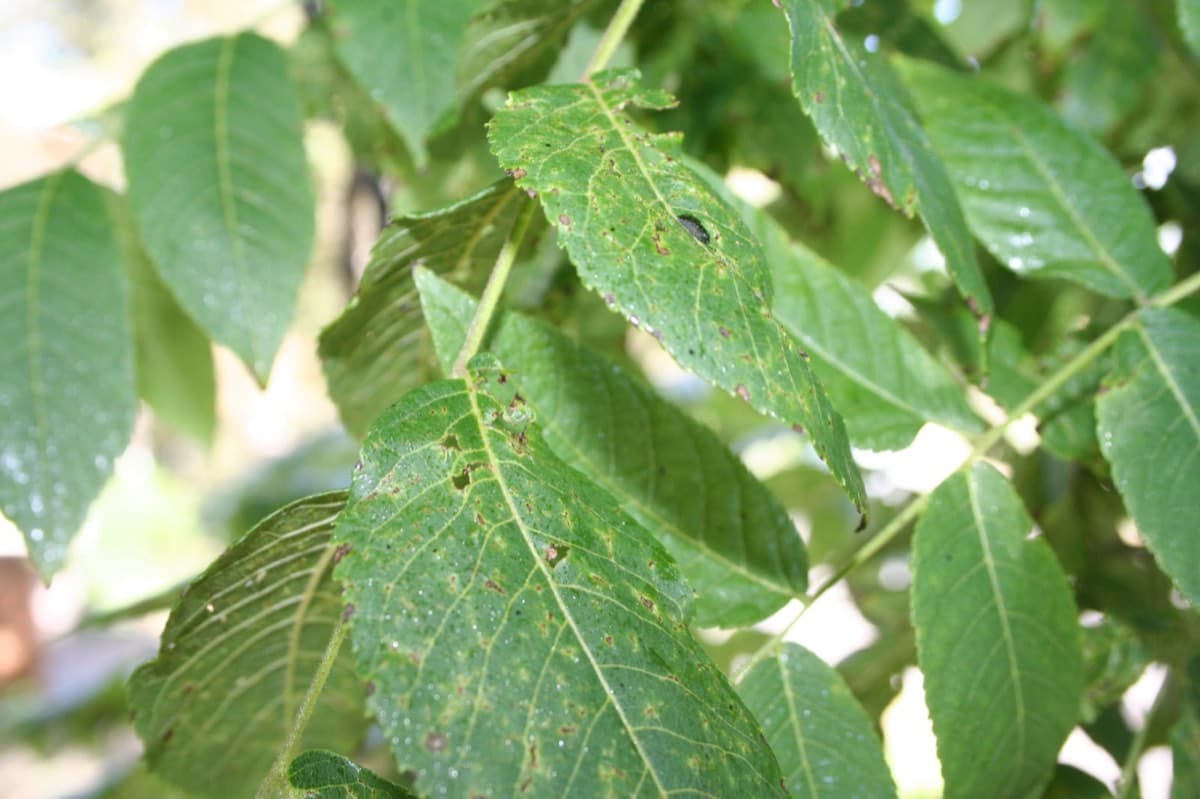
Black walnut (Juglans nigra) — narrower, more numerous, finely serrated leaflets; crushed leaves smell spicy/citrusy, not foul.
Photo: Jeffrey Beall · source · CC BY-SA 2.0